
Learning to care for fruit trees is a huge undertaking, as pests like coddling moth can quickly ruin your harvest potential.
James Fournier 09/2025
Maybe you’re feeling the pressure of rising food prices, or maybe you seek higher-quality produce or social connections grounded in nature. There are many opportunities for growing your own food, whether that be at home or in a shared space like a community garden. With strategies like vertical gardening and hydroponics, one can establish a growing space almost anywhere. Now is the best time to make a healthier change to “get back to your roots.” So start small today, and grow!
It happens all the time. You head to the grocery store, buy some strawberries, and maybe some tomatoes. You head home, excited to dig into some delicious, fresh produce, only to be disappointed by a bland, watery experience.
The global food economy allows for many fruits and vegetables to be purchased year-round. Much of this produce is harvested prematurely and grown in ways that focus on larger, more resilient yields that will survive the long journey to your table. Growing our own food, while more season-dependent, allows for better control over the quality of what we consume.
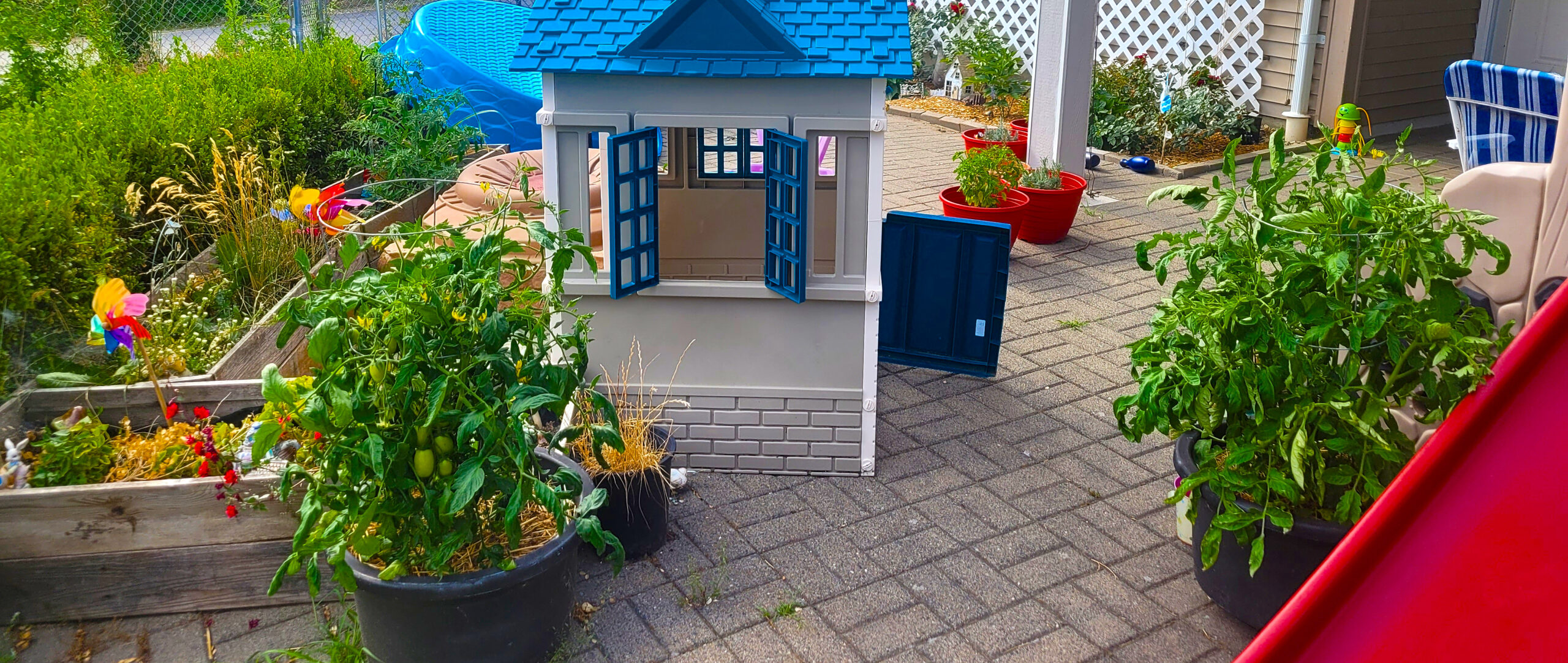
Finding Space

Scrap wood is an easy way to divide areas for growing.
James Fournier 09/2025
There are many ways to make space for growing, besides the traditional garden beds. Green Building Canada highlights sustainable gardening options that can be adapted to fit different living situations.
Two versatile options they cover are:
- Hydroponics: a space and water-efficient strategy that requires no soil. While it has a higher setup cost, you will have quicker growth that is less affected by pests and disease.
- Vertical Gardening: a space-saving strategy that focuses on growing upwards using things like walls, trellises, or stacked planters. This is great for small areas like apartment balconies, combined with an efficient watering system for simplicity.
Working with a Budget
With rising food prices and a constricting economy, people are experiencing more stress about food security. Instead of finding ways to make more money, consider learning to grow your own food as a way of trimming your grocery budget. Leigh Hunt, a Horticulture expert interviewed by The Guardian suggests growing “the most expensive food you like.” She recommends starting with plants like salad leaves, fruit bushes, and beans.
Gardening itself can quickly become an expensive hobby, so always be on the lookout for ways to reduce your costs. Huw Richards, a gardening author also interviewed by The Guardian, says, “the best investment you can make is to make your own compost.” He says this can be as simple as a pile in the corner of your yard. Make connections with neighbours and other local growers, and you may find people interested in sharing or swapping plants and seeds. You might even find a mature gardener who needs help, an experience that Rob Smith, a third interviewee of The Guardian, says is “almost like an apprentice, you will gain knowledge and experience.”
Feeling Better

Curing garlic adds rustic charm and symbol of accomplishment to this covered patio.
James Fournier 09/2025
If the experience of growing and enjoying your own food isn’t enough, gardening can bring many health benefits, as noted by Lisa Wimmer from the Mayo Clinic Health System. Not just from the exercise and time spent in nature, but she says that the routines required in gardening also create “a soothing rhythm to ease stress.”
As an old saying goes, the best time to plant a tree was twenty years ago, while the second-best time is today. Take a look at your home, your social groups, and your community at large. Get involved with nature in a way that works for you, and reap the benefits of a healthier, happier lifestyle.
Leave a Reply